A Recap of LRVHealth’s 2026 Annual Meeting
July 16, 2026
We recently welcomed our Strategic Limited Partners, Executive Advisors, and portfolio company CEOs to Boston for our 2026 Annual Meeting. Each year, this gathering provides an opportunity to bring together leaders from across our network to share perspectives, strengthen relationships, and discuss the forces shaping healthcare.
Across conversations spanning AI implementation, cell and gene therapy, clinical ownership models, healthcare leadership, and more, one theme consistently emerged: Healthcare organizations are navigating an environment of accelerating change, increasing complexity, and growing pressure to evolve. More than ever, collaboration across the healthcare ecosystem will be essential to identify, evaluate, and adopt the innovations that matter most.
Below are recaps of the sessions from this year’s Annual Meeting, highlighting some of the key themes and ideas explored throughout the event.
The AI Landscape: From Rapid Innovation to Implementation
If there’s one thing that’s defined the last year in healthcare technology, it’s the speed. AI has moved from pilot programs and boardroom conversations to real deployment inside healthcare organizations faster than many expected. The question is no longer whether to adopt AI, but how to implement it responsibly, measure its impact, and identify the right partners in an increasingly crowded market.
Our first two sessions were dedicated to exploring these questions. We opened the meeting with a keynote featuring John Brownstein, PhD, SVP & Chief Innovation Officer at Boston Children’s Hospital; Dominic King, MD, PhD, VP of Health at Microsoft AI; and Syed Mohiuddin, DO, Head of Healthcare at Anthropic on the evolving AI landscape. The following morning, Brian Anderson, MD, President & CEO at the Coalition for Health AI and Lee Schwamm, MD, SVP/Chief Digital Health Officer at Yale New Haven Health System and Associate Dean, Digital Strategy and Transformation at Yale School of Medicine joined us for a breakfast discussion on the practical implementation of AI inside healthcare organizations.
Together, these conversations highlighted both the extraordinary pace of AI innovation and the practical realities of scaling it across healthcare. Panelists discussed the importance of defining ROI before launching pilots, building trust among clinicians and patients, preparing the workforce for new ways of working, and developing governance models that can keep pace with rapidly evolving technology.
From Breakthrough to Bedside: How Cell and Gene Therapies Will Redefine Modern Medicine
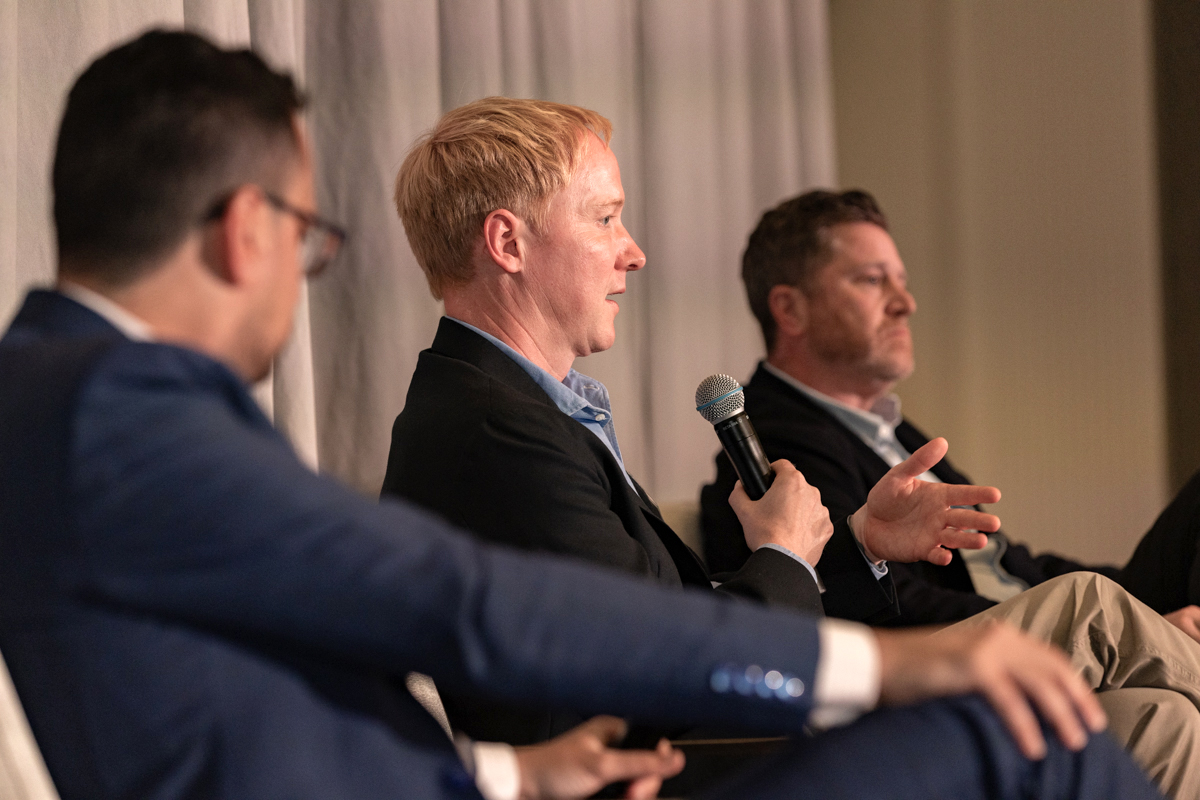
Cell and gene therapies are rapidly moving from scientific breakthroughs to frontline clinical reality. Their promise — durable remission, functional cures, and fundamentally new treatment paradigms — signals a shift not just in medicine, but also in how healthcare is delivered, financed, and scaled.
Moderated by Troyen Brennan, MD, Former EVP and Chief Medical Officer at CVS Health and Adjunct Professor at Harvard Chan School of Public Health, the discussion featured Navneet Majhail, MD, Physician-in-Chief of Blood Cancers at HCA Healthcare Sarah Cannon Cancer Network, and James Wilson, MD, PhD, President and CEO of Gemma Biotherapeutics and Executive Chairman of Franklin Biolabs.
The conversation explored the widening gap between scientific innovation and the infrastructure needed to support it. Panelists highlighted the barriers to adoption and emphasized that fully realizing the promise of these therapies will require delivery and payment models to keep pace with scientific advances.
To learn more about our perspective on this topic, read LRVHealth's recent article, "Why Cell and Gene Therapy Keeps Stalling at the Bedside."

The Three-Way Race for Physicians: Competing Clinical Ownership Models and Market Impact
As physician employment patterns continue to evolve, health systems, corporate and private equity-backed platforms, and independent providers are all competing to attract and retain clinicians while responding to changing market dynamics.
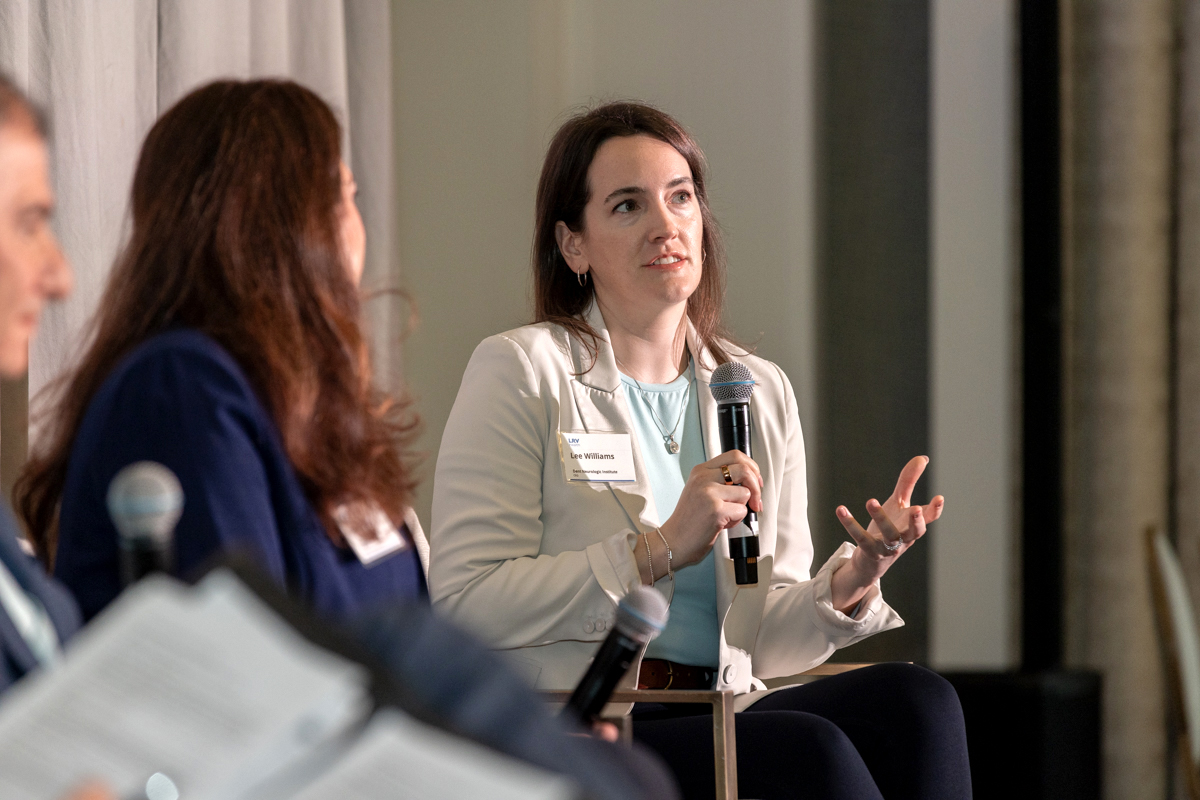
The panel, moderated by Alex Jahangir, MD, orthopaedic trauma surgeon and physician executive at Vanderbilt University Medical Center, featured Katherine Evans, DNP, President of the Novocardia Division at Cardiovascular Associates of America; Daniel Roth, MD, EVP and Chief Operating Officer at Trinity Health; and Lee Williams, CEO of DENT Neurologic Institute.
The discussion examined how physician employment decisions increasingly reflect a combination of financial considerations, professional autonomy, organizational culture, and work-life expectations. Panelists explored how organizations can build sustainable models for clinical ownership and empowerment, while remaining adaptable to changing workforce preferences, regulatory pressures, and evolving models of care delivery.
Who Ultimately Wins the AI Bot War in RCM: Providers, Payers, or Both?
Among the various workflows in healthcare being reshaped by AI, revenue cycle management (RCM) is experiencing the most rapid transformation. More than 80% of healthcare leaders consider AI to be integral to RCM operations, and more than 60% have already deployed AI-powered solutions to improve claims processing, streamline denials management, and optimize revenue integrity. Payers have been slower to react, but are increasingly investing in technology to support their operations and respond to providers.
Moderated by Jeremy Friese, MD, Founder and CEO of Humata Health, the panel featured Katerina Guerraz, EVP and Chief Operating Officer of Aetna and President of Aetna Medicaid, and Jeff Mincher, SVP and Chief Revenue Cycle Officer of Texas Health Resources.
The group explored how both providers and payers are applying AI across revenue cycle and claims processing workflows while recognizing that today's processes often create unnecessary friction for everyone involved. The group discussed how payers and providers can align on a shared vision around using technology and AI to create frictionless experiences for patients and providers, cut down on claims rework, embed transparency, and build toward real-time payments driven by interoperability.
CEO Fireside Chats: Leading in Today’s Environment
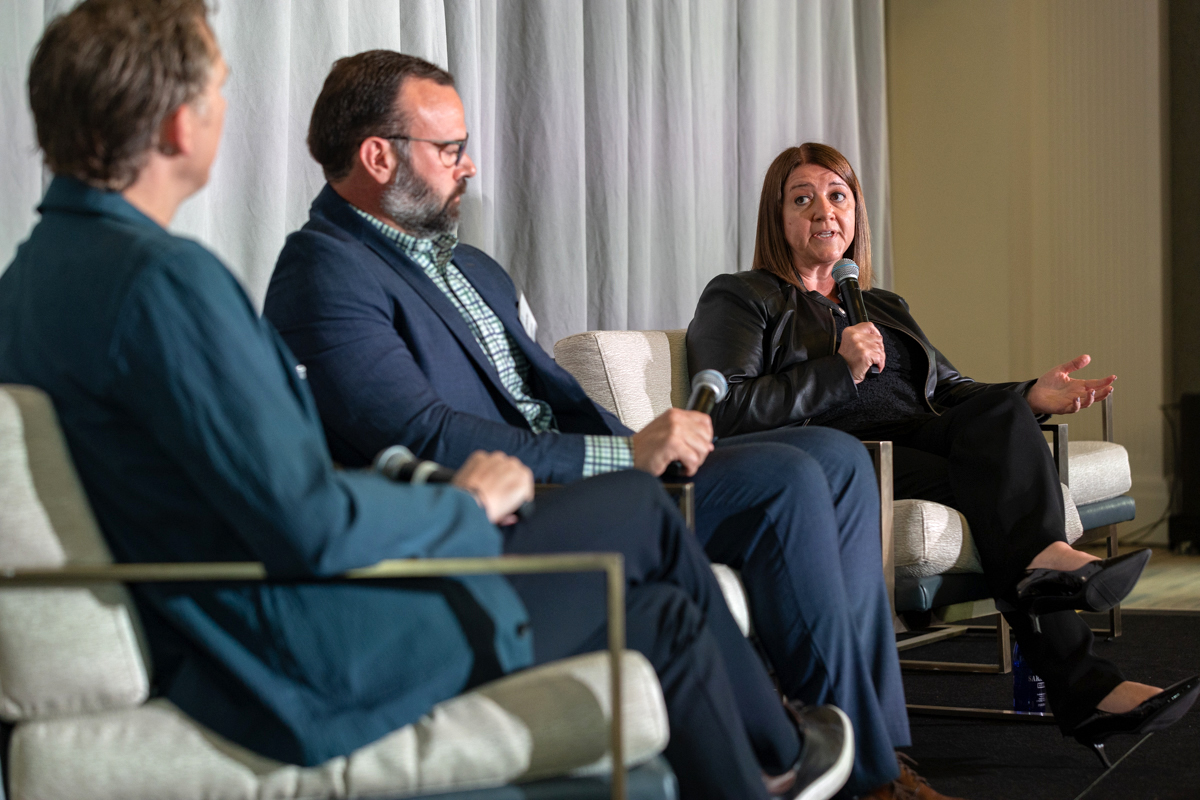
Given the complex environment healthcare organizations are navigating today, we dedicated two sessions to conversations with current and former CEOs of leading healthcare organizations.
Our first fireside chat brought together Tom Priselac, President and CEO Emeritus of Cedars-Sinai, and Winjie Tang Miao, incoming CEO of Texas Health Resources, in a conversation moderated by Sachin Jain, MD, President and CEO of SCAN Group and SCAN Health Plan. The discussion explored how the role of the healthcare CEO continues to evolve, and the importance of building organizations grounded in strong values, resilient cultures, and leadership teams capable of guiding change through uncertainty.

The second conversation featured Brian Pieninck, President and CEO of GuideWell, and Terry Shaw, former President and CEO of AdventHealth, who reflected on the opportunities and challenges shaping healthcare in Florida and the growing importance of collaboration between payers and providers. The discussion emphasized that healthcare leaders will increasingly need to think beyond their own organizations and build trusted partnerships across the broader ecosystem to improve care while managing cost.

We look forward to continuing these conversations throughout the year and to welcoming our network back together again next year. If you’re an entrepreneur thinking about any of the challenges and opportunities highlighted above, we’d welcome the opportunity to connect with you. Please reach out to our team.